Dubai homes face a particular set of flooring challenges. High temperatures, air conditioning running for most of the year, sand and dust carried in from outside, and the occasional spilled drink all put daily pressure on the floors beneath our feet. Choosing a surface that can handle all of this without constant worry is not a small decision.
Vinyl flooring has quietly become one of the most practical answers to that challenge. It looks like wood or stone, feels comfortable underfoot, and stands up to water and wear in a way that many traditional materials simply cannot. For families and pet owners, it deserves a closer look.
Why Dubai Homes Need Waterproof Flooring
Water is the enemy of many popular floor types. A leaking washing machine, a mop left too wet, or moisture tracked in from a pool area can cause real damage. Laminate swells, hardwood warps, and even some tiles suffer when water seeps into grout lines and stays there. In a city where humidity rises sharply in summer, that risk is present all year round.
Modern vinyl is built differently. Its core is waterproof, which means spills and splashes sit on the surface instead of soaking in. A quick wipe is usually enough, and there is no anxious wait to see whether a stain or a swollen plank will appear the next morning. That peace of mind is why vinyl is now a first choice in kitchens, bathrooms, and entrance halls across Dubai.
What Vinyl Flooring Is Made Of
Today’s vinyl flooring is a layered product, and each layer has a job to do. The wear layer on top resists scratches, scuffs, and stains, while a printed design layer carries the wood grain, stone pattern, or tile look. The core layer gives the plank its rigidity and waterproof strength, and the backing adds stability and a little cushioning underfoot. Luxury vinyl planks mimic timber boards, while luxury vinyl tiles imitate stone or ceramic, both in click-lock formats and a wide range of colours.
The Installation Process Step by Step


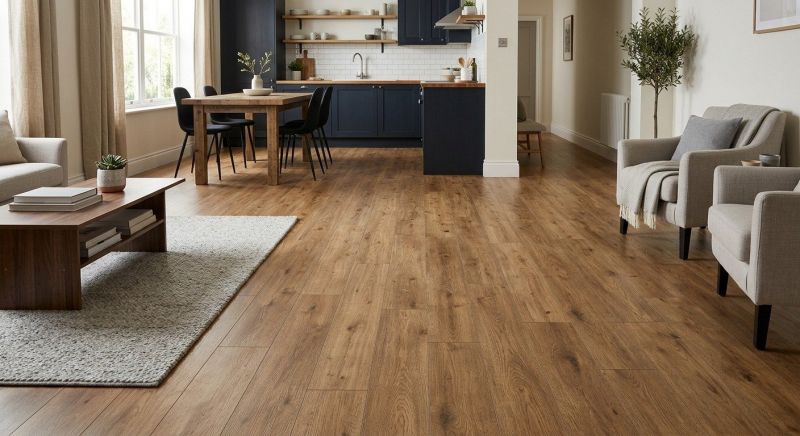
Installation begins long before the first plank is laid. The subfloor must be clean, dry, and level, because even small bumps can show through or cause planks to flex. Professional installers check moisture levels, fill low spots, and remove any old adhesive or debris. Once the surface is ready, the planks are acclimatised in the room for a day or two, then laid row by row, clicking together with staggered joints. Skirting boards are refitted, and the room is ready to use almost immediately.
For a typical Dubai apartment living room and bedroom, a professional team can often finish in one to two days. Larger villas take longer, but the work is still far quicker than tiling, which needs adhesive to set and grout to cure. Because vinyl installation creates little dust and no wet trades, families can often stay in the home while the work goes on, moving furniture from room to room as each area is completed.
Vinyl vs Hardwood, Tiles and Marble
Hardwood is beautiful, but it is a demanding material in this climate. It expands and contracts with temperature and humidity, it scratches under furniture and pet claws, and it can be badly damaged by a single serious spill. Refinishing a hardwood floor is expensive and messy. Vinyl gives homeowners the look of wood without most of the risk: the grain patterns are so convincing that guests often cannot tell the difference, yet the surface resists scratches and will not warp if water reaches it.
Tiles and marble have long been the default in Dubai, and they handle water well, but they are cold underfoot, hard on the knees, and unforgiving when a glass or a phone is dropped. Grout lines also collect dirt and need regular scrubbing. Vinyl feels warmer and softer, which makes a real difference in bedrooms and living areas where people walk barefoot. It is quieter too, and because there are no grout lines, cleaning is a simple sweep and mop.
Everyday Maintenance Made Simple
One of vinyl’s greatest strengths is how little it asks of its owners. Daily care is a sweep or a vacuum with a hard-floor setting, followed by a damp mop with a mild, pH-neutral cleaner when needed. There is no waxing, no sealing, and no special treatment. A few simple habits extend the floor’s life further: felt pads under furniture legs prevent scratches, a doormat at each entrance catches sand, and wiping up spills promptly keeps the surface looking new.
No floor is indestructible, and vinyl is no exception. Heavy furniture dragged across it or a sharp object dropped from height can leave a mark, but damage is usually local: a single click-lock plank can often be lifted and replaced without disturbing the rest of the floor. Choosing a thicker wear layer at the outset is the best insurance, and keeping a few spare planks from the original batch makes future repairs invisible.
Where Vinyl Works Best in the Home
Kitchens and bathrooms are the obvious starting points, thanks to the waterproof core, but vinyl works well throughout the home. Bedrooms benefit from the warmth and quiet, living rooms from the wood-look styling, and hallways from the scratch resistance. Many Dubai homeowners now run the same vinyl plank through the whole apartment for a seamless, spacious feel. It is also a strong choice for home offices and children’s rooms, where spills and constant use are part of daily life.
Cost and Value Over Time
Vinyl sits in a sensible middle ground on price. It costs more than basic laminate but considerably less than hardwood or natural stone, and installation is faster and cheaper than tiling. When the long lifespan and minimal maintenance are factored in, the total cost of ownership compares very favourably with most alternatives. For homeowners planning to sell or rent out a property, vinyl is also a smart investment: it photographs well and signals that the home is low-maintenance and ready to move into.
Choosing the Right Vinyl for Your Home
Before ordering, check the wear-layer thickness, the plank dimensions, and the warranty, and ask for samples to view in your own lighting. A colour that looks perfect in a showroom can appear quite different under your home’s warm evening lights, so live with a sample for a day or two before deciding. Also confirm that the product is rated for the rooms you plan to use it in, especially wet areas.
If you want to see the full range of styles, finishes, and waterproof options available in Dubai, you can explore them here: https://www.carpetshopdubai.com/vinyl-flooring.php. Comparing plank sizes, wood tones, and stone effects side by side makes the final choice much easier, and a specialist can advise on the best option for each room in your home.